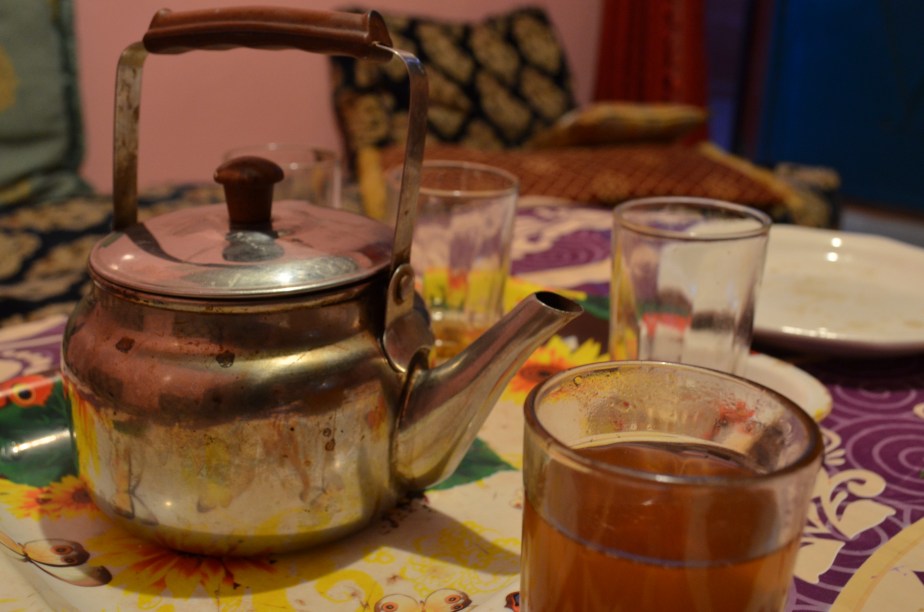
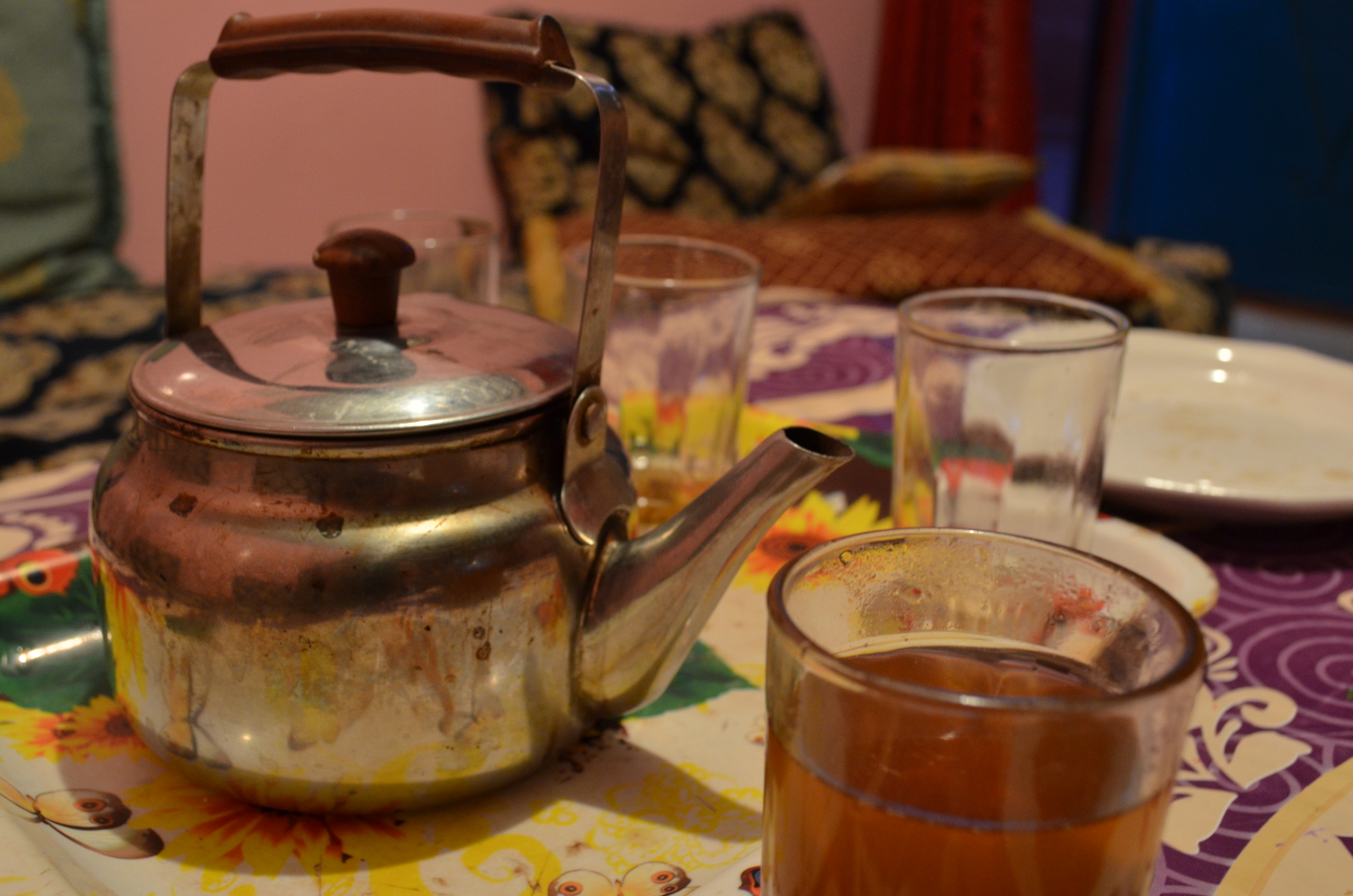
Mint tea is a daily break from my afternoon crunch. And a chance for me to get my sugar fix. Three giant cubes in this pot!
Those of you who know me well are probably aware that anxiety is my middle name. The Vikings would have dubbed me Liz the Worrier, and I would ironically die in almost every horror movie. My fear creeps in at the very insinuation of the word deadline.
You may be thinking, “…and this girl wants to be a journalist?”
Short answer: Yes. What could be more life-affirming than facing an all-consuming fear everyday? What could be better than learning to let go?
Mastering this craft has the added element of conquering my anxiety on almost every project I do. I’ve tried yoga, running, deep breathing exercises and of course, trying to ignore it. No matter what i do, or how small the project, I hate the feeling I get when a story is out of my immediate control. I will pace for the greater part of a half hour waiting for a source to reply to my emails and my eyes will always dart to the nearest clock when I hit a dead end in my research.
So here I am with my first assignment…in a foreign country…in another’s home. I’m tapping my fingers. I’m sighing. I’m pacing and furiously typing.
My sister is worried.
“Labez?” -“Jayeed” -“You should take a nap.” -“Shokran. But I’m not tired.”
But in a Moroccan household there is one occasion that I am forced to break for. Food. “Maj, Liz maj!”
So on Saturday, between scanning for articles and brainstorming interview subjects, I walked upstairs and peeked my head into the kitchen where Mama and Papa sat. Moma preparing for tea. Papa gazing past her out the window and smoking.
At this point, I think my family has realized that I like to help cook. When she saw me, Mama clamped down on my arms and pulled me over to the counter. She put a bowl of egg in front of me and dropped a fork inside.
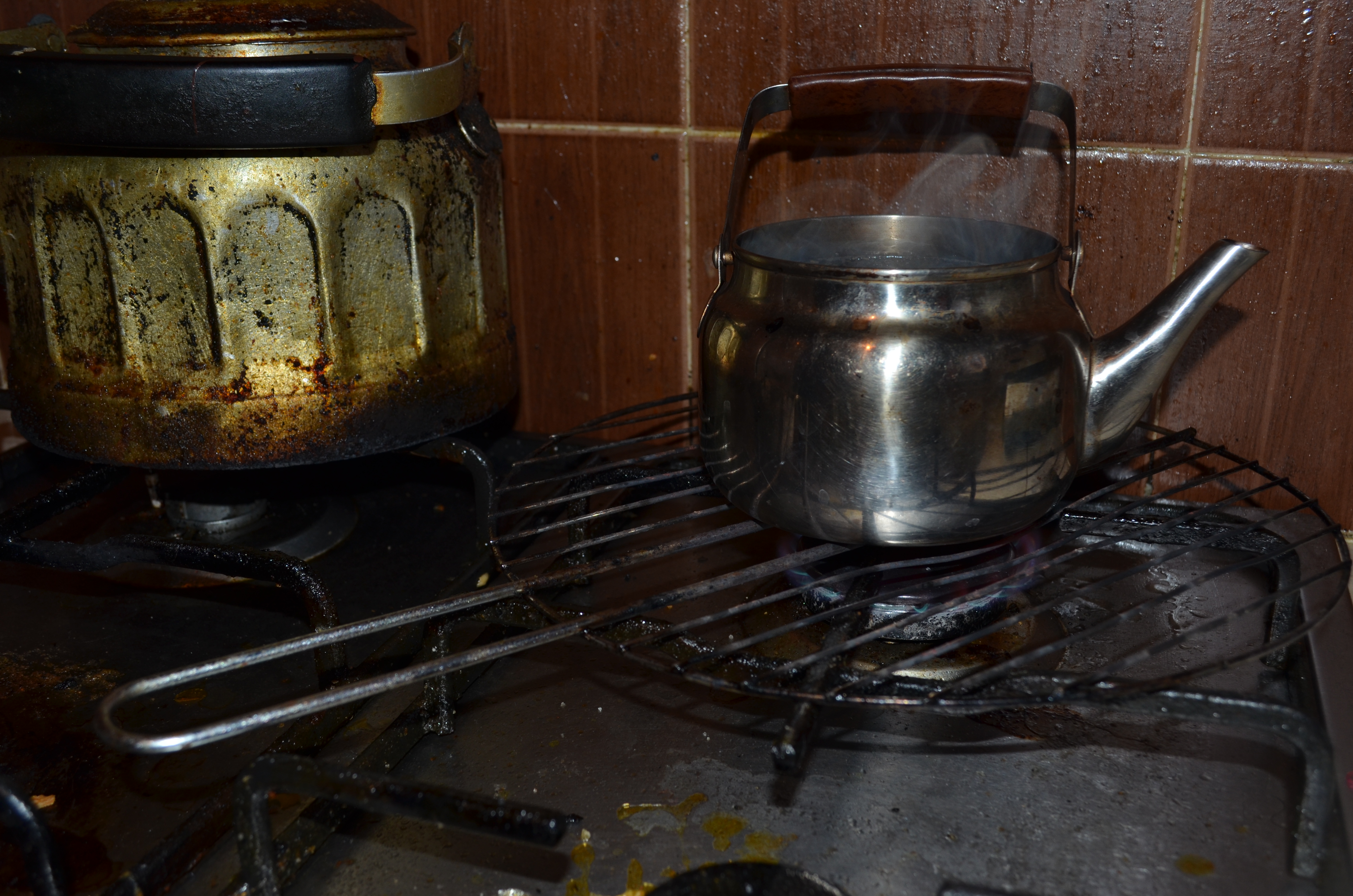
Before I knew it Mama was directing my attention around the room showing me how to dunk the hoobs into the egg mixture and place pieces on the pan. Do I know how make french toast? Of course. But that didn’t matter. Mama was so happy she grabbed me and laid a kiss on my forehead when I took a picture of the tea kettle (which she had me put on of course). She laughed when I tried to pour the tea.
In Morocco it’s traditional to start down down by the cup and stretch your arm up, lengthening the stream without splashing. My attempt was a little sloppy, but I like to think it got the job done.
More importantly, as I brought the trays out to the sitting room for everyone, I realized my breathing had slowed and I was smiling. It’s not full-proof but I think my anxiety’s going to be okay…for now.
Mint tea getting steamy in the final phase of prep (well, before we add absurd amounts of sugar)
This week I had my first week of classes, first Arabic quiz and now contemplate my first assignment. It’s been a lot to take in, and my brain has never endured such a workout. We begin each day with two hours of Arabic. We have started to learn the alphabet, but everyday there is new vocabulary. Even more confusing, we learn Fu’sha (or Modern Standard Arabic), but in the street and at home can hear anything from French to Darija (Moroccan Arabic). Note that Darija is often uses a completely different word to mean the same thing. When my host mother tries to teach me new words she’ll say them in Darija then French, and then sometimes in Fu’sha or Amazigh (aka Berber, or those who where native to Morocco prior to Arab migration). Communicating here is no joke.
Speaking of which, we have also begun discussing the media in Morocco. Besides Arabic classes my days have included a series of lectures and discussions about both journalism and Morocco.
Earlier this week we spoke with Driss Ksikes, the former editor-in-chef of Tel Quel who was tried in Morocco a few years ago after a humor issue went to far in its commentary on religion, sex and culture. He was given a suspended sentence of three years, but left the paper when told he should correct himself in the future.
One of the problems in Morocco is that censorship in the media is not highly publicized. Unlike China and North Korea, the government allows for a relatively free press, with a few exceptions: Any careful journalist knows what not to say about the monarchy, Islam and the Western Sahara (disputed territory to the South). As foreign journalists, our reporting isn’t guided by the same rules, however Al Jazeera, for example, was forced to close it’s base here recently, proving just how touchy the government is on the topic of the Western Sahara.
By the end of the week (and after another couple discussions) we looked at ethics, and again we looked at the importance of a program like this. More importantly, we looked at the importance of giving journalists the chance to discuss amongst themselves.
This is where taking courses in journalism can come in. I know journalism degrees make a great punchline. You’re going to school to learn a skill that traditionally people pick through experience. But in an age when anyone can turn on a computer or pick up a camera and make themselves sound well-informed, I think it is ever more important that their are others who follow the standards and ethical guidelines constructed through generations of trail-and-error. By simply talking about the difference between holistic and lacking reporting, we can create an environment of “news literacy” as Mary calls it. Society can learn how to navigate information overload so long as we take the time to understand what is credible and how every story could have been improved.
But as of now, my computer is out of battery and I have to go. So with a stomach full of cous-cous I’m running off to meet my journalism partner for the next three months! More to come…
Orientation is now officially over and all my time spent at the Center for Cross Learning will be for just that, learning. My journalism classes begin next week, after 8:30 AM Arabic classes. It’s starting to really set in that this is where I live. Like my first semester in Boston, it’s a question of when I stop walking the streets looking up (in addition to when I feel comfortable reaching across the table for an apple during dinner with my host family).
In a Thursday journalism session, the future of backpack journalism came up -as I’m sure it will throughout the semester. Mary Stucky, who runs our program and will act as the professor/editor of our group, sent us a link to this article from The New Yorker. She says this discredited idea of slow journalism is one thing we will work this semester to understand. Mary tells our group that we are here to do something that “parachute correspondents” cannot. Not only are we going to immerse ourselves in the culture, walking before we can run, but we will work closely with a journalist writing our story for a Moroccan audience.
After looking at Paul Salopek‘s story, I am reminded of the way that many journalists use Twitter to communicate. They send out 20-30 updates/day. Breaking news in 140 characters or less, with usually only a fraction of them dedicated to one story. Of course there is a place for this, but imagine if more people dedicated themselves to one project. If people all over the world could focus all their analytic energy to further communicate diverse cultures and languages in their own complex experiences. Surely our in our information driven society there is a place for this too.
Can I make a living from doing this? That is still to be determined. But I can always try.
I write this sitting in the living room in a djellaba on loan from my host mother. Today we are driving out of town for my “uncle’s” engagement party. This is why my mother dressed me this morning in an elaborate maroon dress and a beaded necklace.
Latifa is treating me more and more like a daughter. She takes my arm as we walk down the street and last night, when we went to the Hamam (Turkish Bath) to prepare for the party, not only did she force me to wash at least five times, but she scrubbed my back. Hard. I’m still recovering.
It’s experiences like this, going to the public bath with your mom and sisters-listening to friends and neighbors talk (and fight) crowded and naked- that I still can’t believe are real. With each day I can’t help but feel that I can be just a little more confident in my final story, that the days I’ve spent here in the Medina will reflect in my writing and reporting. I hope so. Last night while sitting in the Hamam, I had to wonder how many stories I had read or heard from journalists stationed nearby who may have never had this weekly experience (or another of relative normalcy). I again thought of Mary’s comments.
Coming up: An engagement party in Morocco, my first assignment and pictures of Samia’s flower doodles (now multiplying in my planner and notebook)
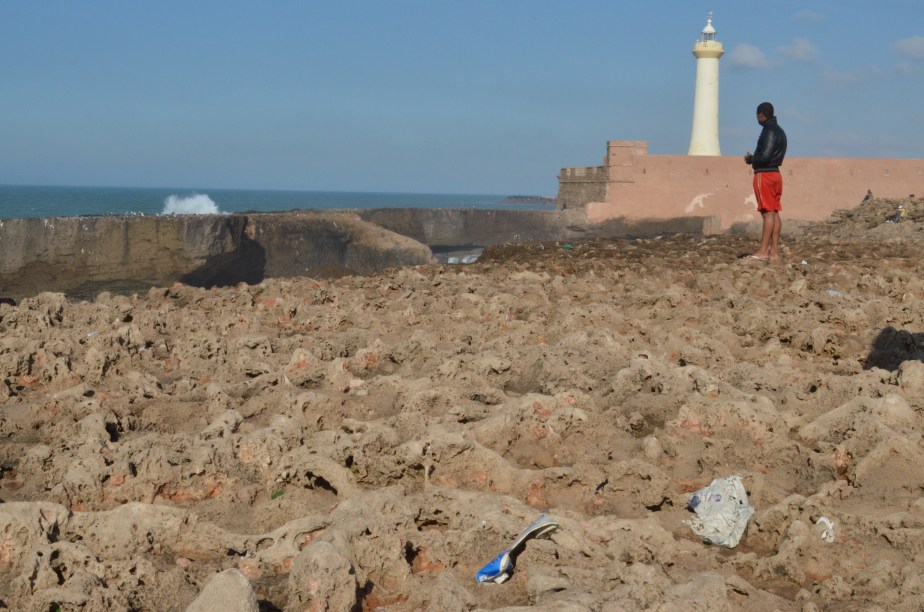
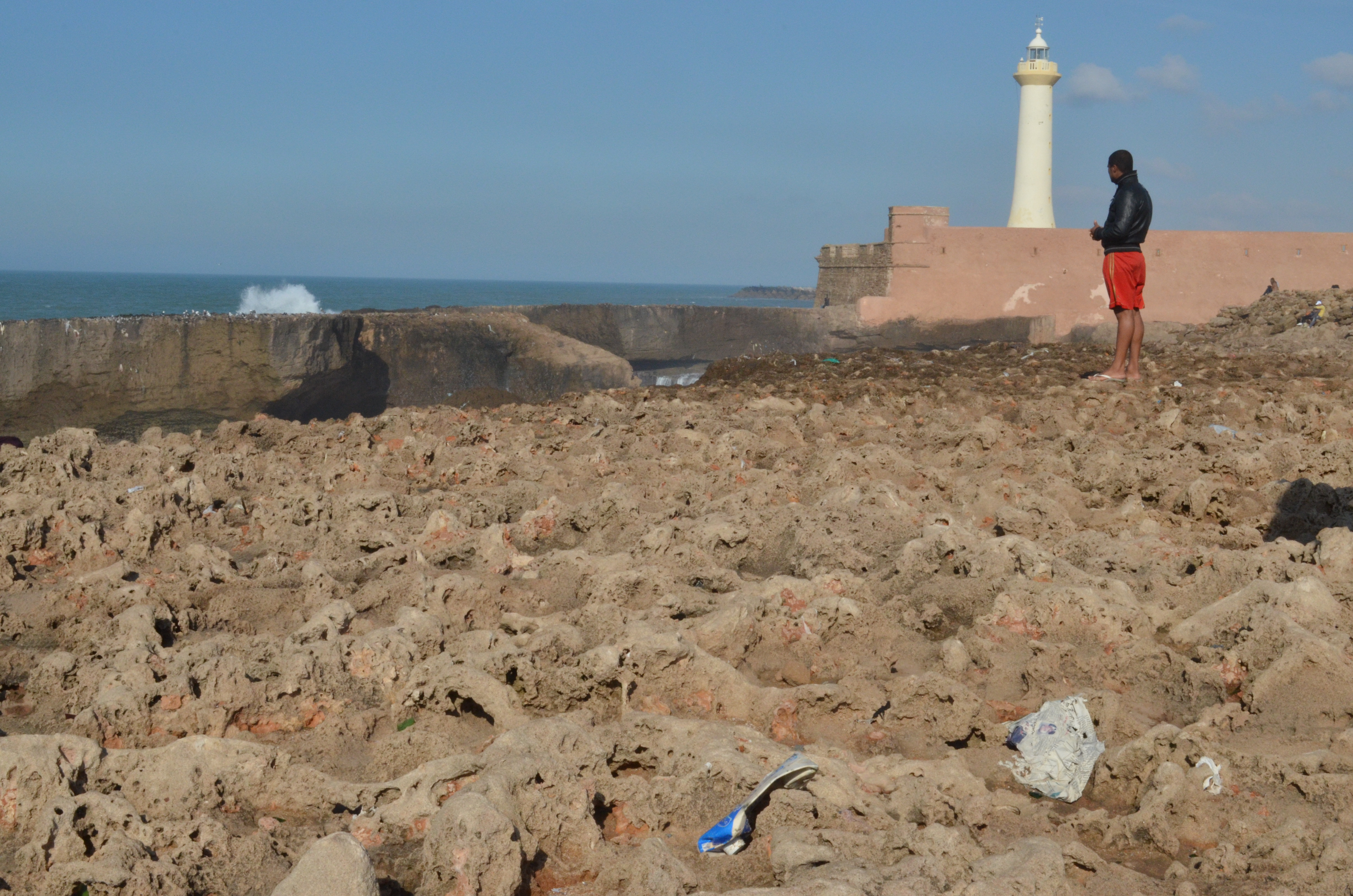
Welcome to Morocco! The beach outside the Medina wall.
To begin, let me apologize for today’s (and any future) belated posts. I’m still adjusting to limited computer access, although I’m not necessarily complaining.
In Rabat I can access WiFi in a few places throughout the city: where we take classes in the Center for Cross Cultural Learning, at the hotel and at some cafes. I can’t read my email while walking down the street or laying in the comfort of my bed. The simple act of checking notifications means greeting the world. This might be an optimistic view, brought on by a over-enthusiastic novice, but I say “good. Let them have their Twitter updates and Instagram back home.”
After becoming accustomed to my iPhone and 3G, constantly checking emails and social media has become habitual. In these past three days, I’ve appreciated the sights and sounds of my new environment without constant distraction. I am remembering that journalism does not only mean being alert to every breaking news update. By taking on that title, busy people all over are relying on my powers of observation.
Something I noticed today was that I’m not alone. While plenty of men (yes, mostly men) hang out around the city during the day at cafes, in storefronts and parks, only a handful of people are on their phones. If they are, they’re talking. No, not scrolling, playing tetris or direct messaging. Real human contact. How stimulating.
I want to work abroad, to travel to the story wherever it takes me. As a journalist, I have realized that I depend on the internet too much as it is. I hope this semester forces me to become comfortable with the traditional ways of finding answers, people and stories. It may not be faster and it will definitely mean speaking to people in confused broken Frenarabish while swallowing the exploding nervous frog in my throat, but I’m already here so bring it.
And did I mention the amazing people in this program with me? i won’t go into details to respect their privacy and the sanctity of our still developing relationships but let it be enough to say that my fellow students have skills beyond those I had previously thought a journalist required. We are all wonderfully curious and adventurous. With each day I am more taken with the different skills each person brings to the table beyond basic language comprehension and great questions. I can honestly say I am excited to work with my group. There is so much to learn not only from this new culture and country, but from my peers -one of the beautiful things about bringing people together with such specific interests.
I meant to post this yesterday to describe my first full day abroad, but I’ll try to now insert a portion of the wealth of information I discovered today as well:
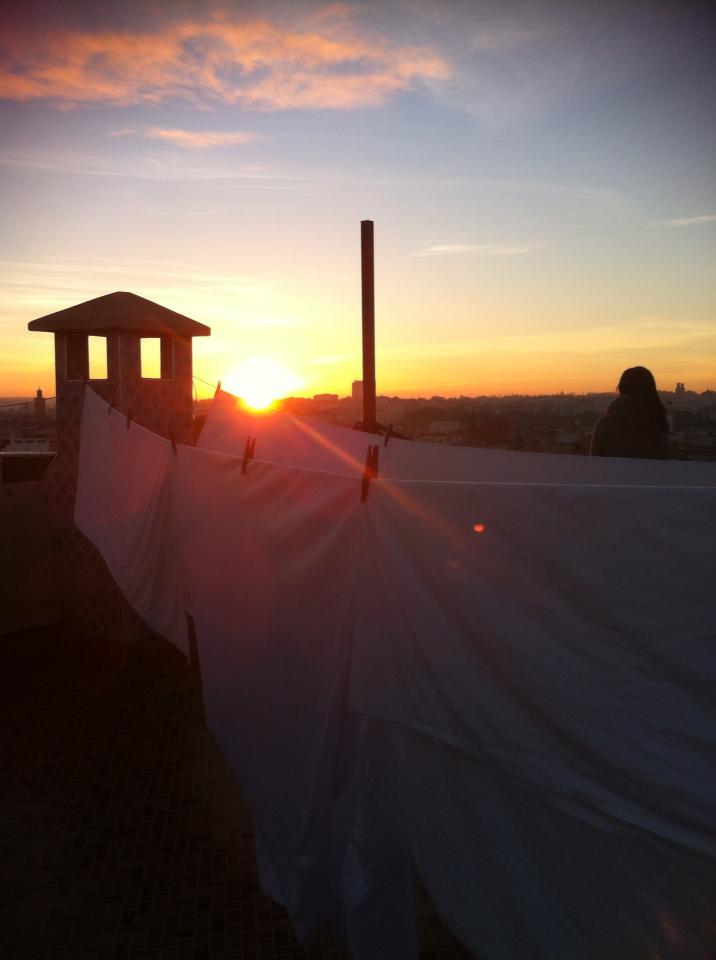
The eleven students in the SIT Journalism program had their first full day in Morocco Monday. It began with early breakfast at the hotel as the sun saturated the rooftop clotheslines in Rabat’s Medina.
The view from the terrace of the hotel morning numero uno.
We then became better acquainted with the Center for Cross Cultural Learning at which we will take classes for the next eight weeks. The building is set off from the main roads, entered via alley. Colorful mosaic tiles cover floor and ceiling throughout the interior. We ate on the first rooftop terrace, but many retired to the second where a calm breeze picked up off the Atlantic to take the edge off a warming sun.
By our afternoon walk, it was about 65 degrees (Fahrenheit). We started at the beach where a considerable surf (relative to the Sound…) ran up and seeped over porous rock. Litter, not unfamiliar to the city streets, was abundant.
Locals sat on the upper rocks looking out at the ocean. This stretch was not as populated as the beaches and parks we passed coming from the airport, where small groups and families crowded the sidewalks and grass.
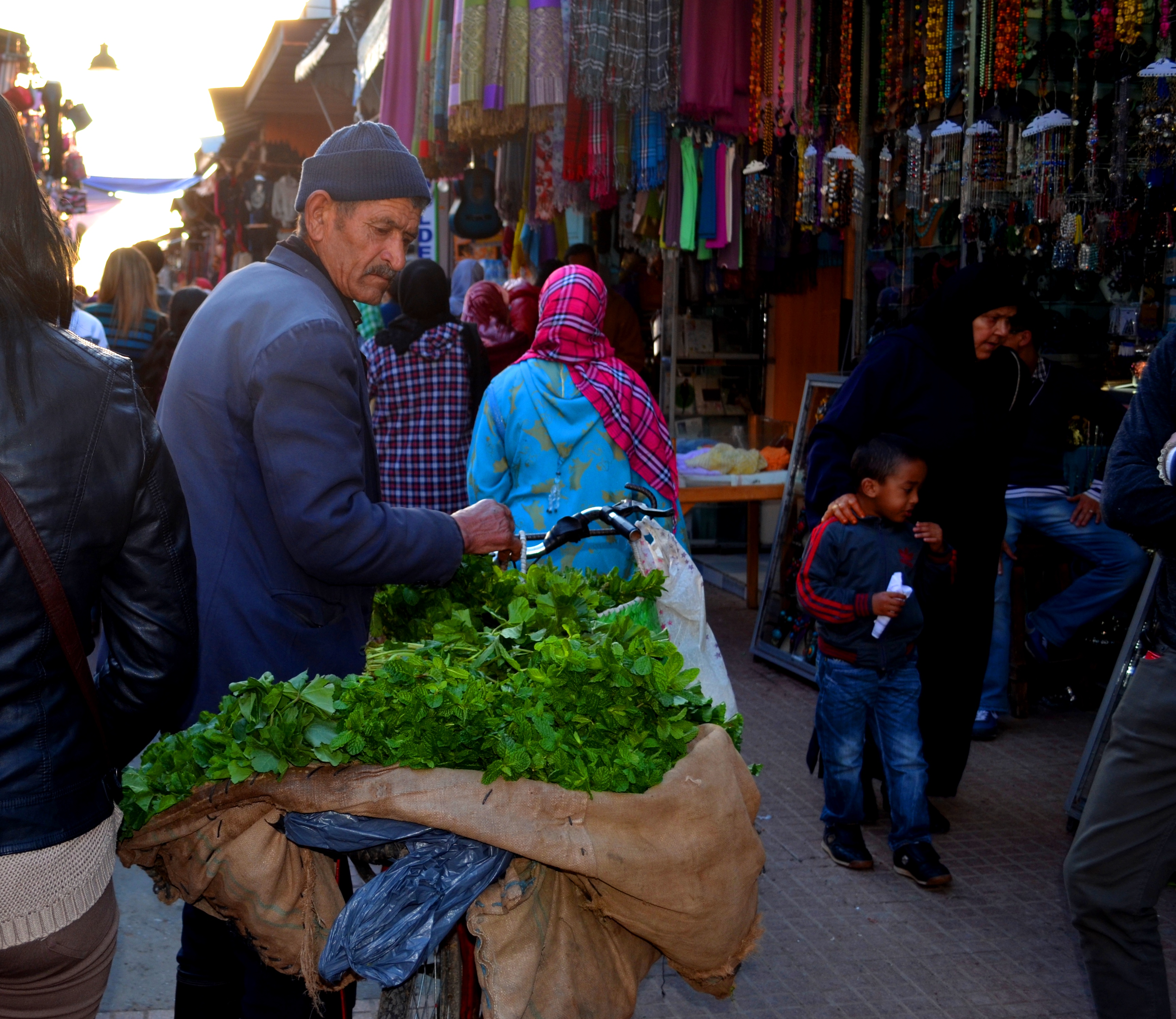
We saw the greatest number of people in the narrow market street of the Medina, where I followed the path carved by this man and his bike.
A man leads his bike through the crowded market in the old Medina.
There are many stray animals in our area. A man in the park fed cats out of a paper bag next to a patio where children played ball. Small children play soccer in squares and alleys alike (even through our feet as we stumbled by).
The day ended back at the Center where we ate dinner outside. Morocco has the most amazing oranges and peaches spiced like apple pie.
By this weekend we should be with our home-stay families and know some “survival Arabic”. Our studies really begin next week, but on Tuesday we had our first big test. After being dropped off in town, we had to find our way back to the center. Luckily I found my way to a cafe we had stumbled upon the night before, but walking in the street without a group while making observations was an experience all its own. I learned that once I learn Arabic it will be easy to practice. Many people, including a woman asking directions, approached me already speaking it.
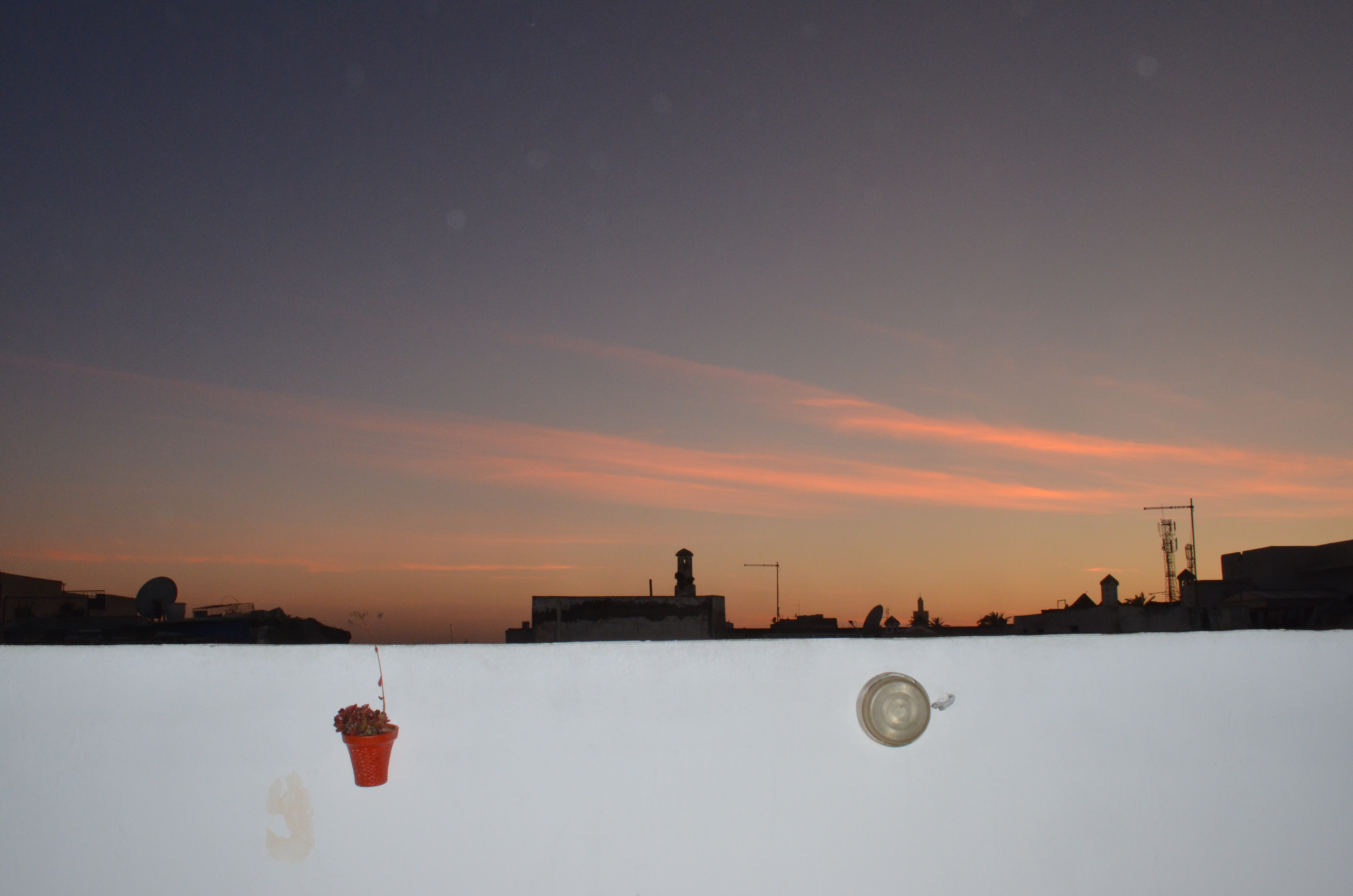
The sunset from atop the Center for Cross Cultural Learning Monday evening.
Still to come: survival Arabic, taxi adventures, Moroccan drummers, my home-stay family and maybe a Turkish toilet.

 Elizabeth Gillis