By Elizabeth Gillis
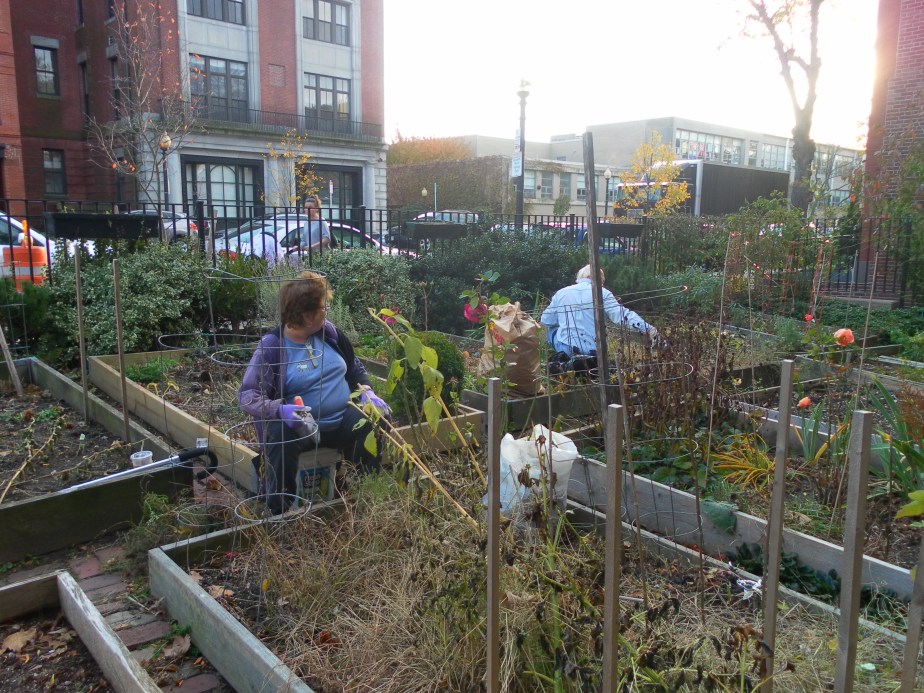
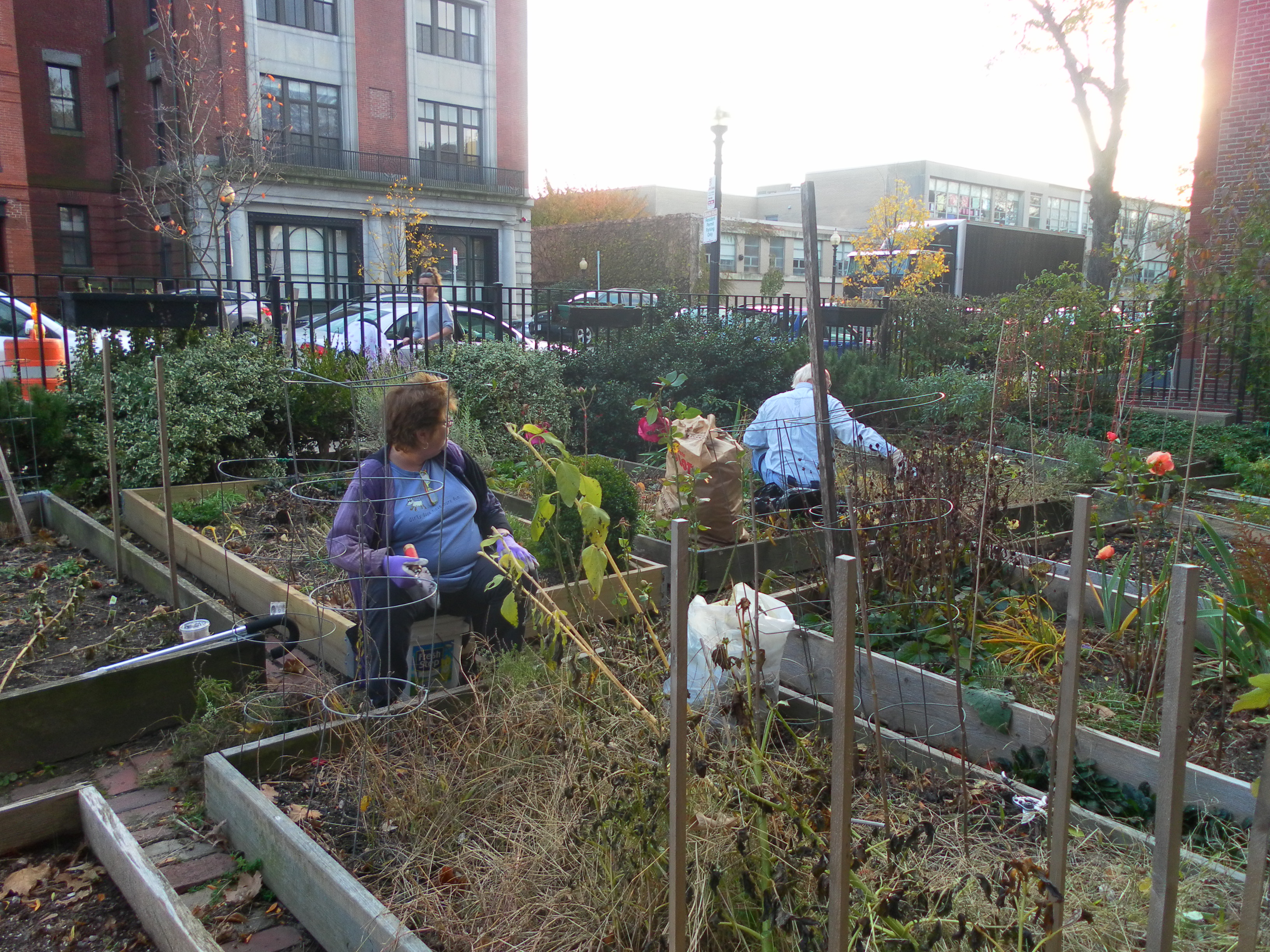
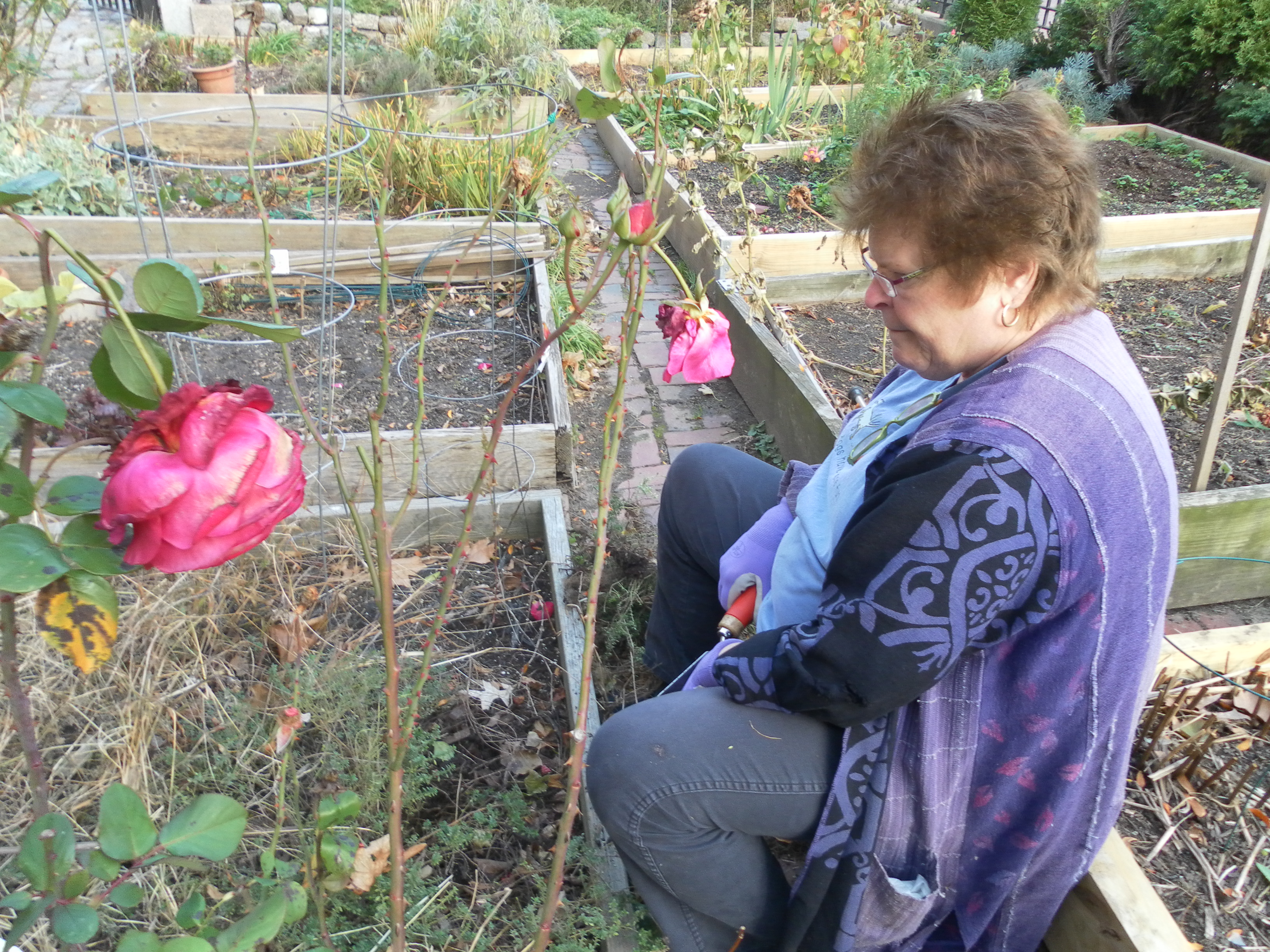
Sharon Kelly surveys her garden beds from atop a re-purposed cat litter box on the corner of Clarendon and Warren Street in Boston’s South End. Digging into the soil she removes unruly thyme next to the pink rose stems she will soon cut down in anticipation of the cold months ahead. It’s an unusually warm afternoon in mid-November.
“On a day like this you go outside and use it,” she says to Paul Duffy, who has just arrived to tend to a box on her left.
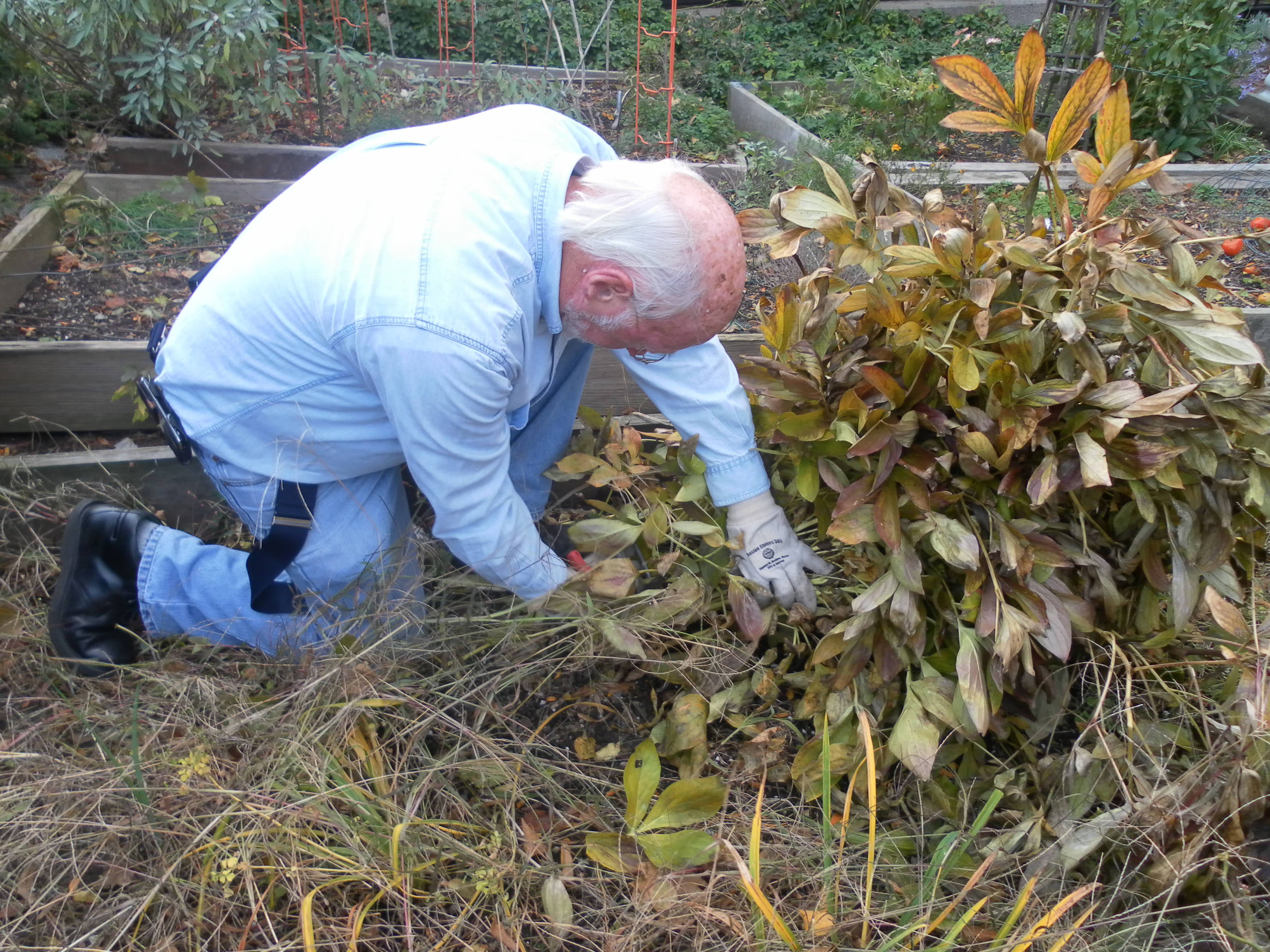
“I grow peonies…roses…lilies….and weeds,” he says. “I do very well at weeds.”
Kelly and Duffy have known each other for almost 20 years. Duffy has lived in the neighborhood since he was a boy, working at a florist’s shop near where the community garden is today.
Kelly has lived here for about 25 years.
“My grandfather taught me how to garden years ago,” she says, “and when I first got here there was a stake in the middle of the garden and it said ‘For Rent’.”
They are regulars in the garden. Duffy remembers when the lot was occupied by a building falling into disrepair in the early seventies. Kelly says she has seen it grow.
“There was no water here so if you wanted to water your plants –if God didn’t do it for you- you had to bring it yourself,” she says. “I got some pretty big arms from doing that.”
The space is now kept by 19 gardeners according to coordinator Kaysie Ives.
“I have a backyard,” she says, “but very few of these people would have the chance to garden.”
Ives says that the neighborhood is grateful to have this space because the South End has traditionally lacked open green space.
“It’s a really important link to the neighborhood,” she says. “People always stop and talk to us when they’re walking by.”
Boston has about 150 community gardens in neighborhoods across the city, according to the Boston Natural Areas Network, an organization that has worked to preserve urban green space since the 1970’s.
There is a movement in many cities working to change the culture of agriculture in urban areas. Whether it be increasing usable green space through community gardens or buying groceries at the neighborhood farmers market, urban residents are looking local.
Proponents of localization and urban gardening say there are many positives to a local lifestyle. They point to effects ranging from increased urban green space to sustainability and support of small farms and the local economy.
Experts say going local has another less talked about effect: people are getting to know their neighbors.
“I think there can be a fear and distrust in areas that are urban. People can keep to themselves sometimes,” says Karen Chaffee, stewardship manager for the Boston Natural Areas Network. “Community gardens can really pull people out and start communication in a neighborhood.”
The Boston Natural Areas Network began working with community gardeners in the 1980s. As one of the main organizations charged with conserving green space in Boston, they noticed a lack of protection for these public plots.
Today they work with residents to prevent city development from extending into public gardens throughout Boston.
“Basically things have to be initiated by the neighborhood or people who want to see it happen,” Chaffee says. “We know about where plots of land are available but there has to be demand.”
She says there are many reasons why people ask for their help in starting up a neighborhood garden. Some residents don’t even know how to garden when they first bring up the project.
“People might be tired of seeing an unused space in their neighborhood, a derelict thing collecting trash, an eyesore,” she says, explaining that the benefits extend beyond food production and neighborhood greenery.
Chaffee says in a city people can easily get by having little interaction with their neighborhood, but when residents share in a project like a garden, they take more ownership of the space overall.
“It’s more eyes out and about in the neighborhood. It draws people out of their homes,” she said.
She says gardeners use the space for a variety of reasons. One person might hold a fundraiser for another group there while someone else might use the space for a birthday party.
“It facilitates communication between neighbors who wouldn’t necessarily have communication with each other,” she says.
Laury Hammel, executive director of the Sustainable Business Network, says this trend extends to local business.
“People want to get back to their roots and get back to local food,” he says.
Hammel says he founded the organization in 1988 with the intention of “creating a strong economy that is local, green and fair.”
Three years ago the network held the first Boston Local Food Festival. He says this year’s festival brought in 40,000 people.
“We just made a lot of people realize, for example, Teddy’s Peanut Butter –people didn’t know that was local,” he says, referencing one of the co-sponsors of the event.
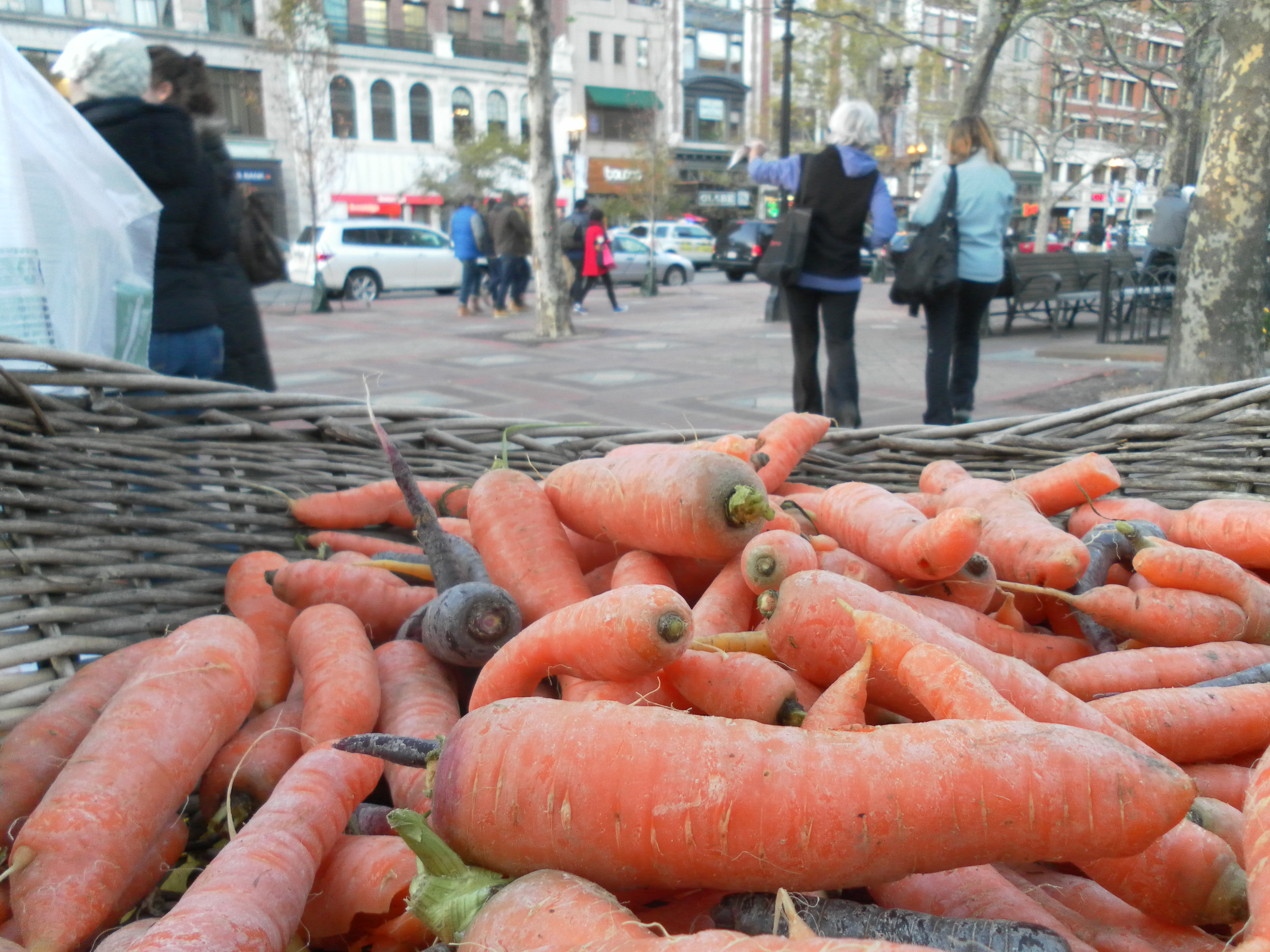
Hammel says about three percent of the food people eat in Massachusetts comes from within the state. He wants to see that number increase by about 10 percent. He says he also hopes for about 50 percent of local consumers’ food to come from New England.
The Sustainable Business Network assists restaurants trying to use local products and holds All Local Dinners around the city where everything served has been grown and processed in New England. Hammel says their goal is not only to show the benefits of eating local but to make it possible.
One of the objectives of the festival is to bring together people who share this interest.
“There are all these examples of people making connections to develop a strong local food system,” he says.
This year’s festival included restaurants and local food providers from around the city and New England.
One of these businesses is Cambridge’s Sofra Bakery. They work with Siena Farms in Sudbury, Mass. to use local ingredients.
Siena is a relatively small farm, only about 60 acres, but they have a large presence in Boston.
“If people want to get a closer relationship to where their food comes from, it’s important to have smaller stores,” says Trevor Sieck, the marketing director for Siena Farms. “They’re not as alienated from where their food comes from.”
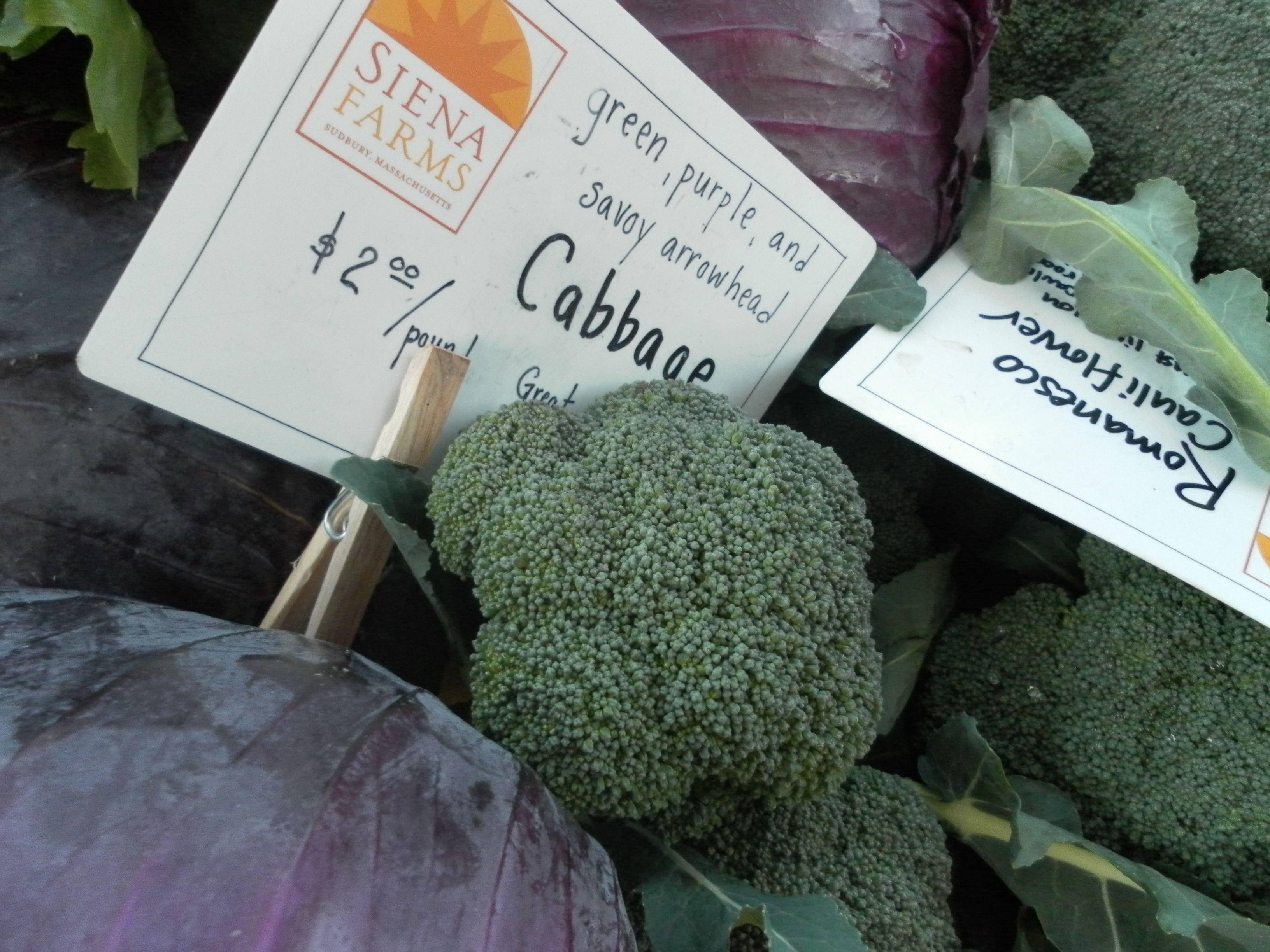 This is Sieck’s seventh year with Siena Farms. He’s had different jobs on the farm, describing its growth as a group effort. Now he spends most of his time at the Copley Square farmers market or at their store in the South End which opened last year.
He says the store gives Sienna Farms a place to sell year round without having to worry about the unreliable conditions they can face at the outdoor farmers market.
It has also given them a permanent location in a neighborhood with a 95 percent occupancy rate according to 2010 report by the Boston Redevelopment Authority.
“We try to have a personal relationship with most of the people that come in here,” Sieck says. “It’s hard not to.”
The store is tiny. This time of year radishes, apples and pumpkins are among the produce lining the walls of the cramped space. This doesn’t stop customers from collecting inside where most give a friendly, knowing wave to the manager and ask about the size of this or the color of that.
“We’ve been selling vegetables in Boston long enough that they trust us to fill them in –what’s tasting good and why,” Sieck says.
Many farms like Siena bring in revenue through Community Supported Agriculture, a nationally recognized program that, to put it simply, allows local foodies to subscribe to locally grown food.
Programs range from weekly to seasonal. Customers pay a flat rate for boxes of whatever is being harvested at the time.
Siena Farms boxes are distributed right outside the store, stacked and waiting for pickup on the sidewalk. With a wave to Sieck neighborhood customers stop by for fall produce.
Sieck says the majority of the farm’s business comes from Community Supported Agriculture, about 50 percent.
He says this is all part of the relationship between producer and consumer that comes with being a small farm.
“It’s really important for a store like us because we ask for people to support us,” he said. “They understand we’re a farm first and a store second.”
Sieck says that this communication is necessary for their small business to thrive.
“Sustainability for most small farms means relying on your community.”
Both gardeners and small farms have found a place in the South End community, defining what urban agriculture means to them.
Related Links:
Boston has nearly 30 farmers markets. The city’s site has a great interactive map which shows local farmers markets open based on specified dates.
 Elizabeth Gillis
Reblogged this on The Boston Harbor Picayune.